
Support that enhances clinical outcomes and the patient experience.
Your clinic delivers evidence-based ketamine treatment. What happens outside the treatment room plays an important role in how patients understand their experiences, stay engaged throughout the treatment series, and carry insights forward into daily life.
Preparation and integration coaching is designed to support that continuum of care without adding clinical burden to your team.
Why Preparation and Integration Support Matters
Ketamine treatment can open meaningful internal experiences for patients. Without structured support, those experiences can sometimes feel confusing, overwhelming, or difficult to apply once patients return to daily life.
• arrive to treatment sessions more grounded and prepared
• feel supported as meaningful experiences emerge
• make sense of insights that arise during treatment
• remain engaged throughout the full treatment series
• apply what they learn in ways that support lasting change
For clinics, this support can strengthen the overall patient experience, encourage continued engagement throughout the treatment process, and help patients feel confident recommending the clinic to others.
What This Looks Like for Patients
Before Treatment
Patients receive preparation support focused on emotional readiness, intention clarity, nervous system regulation, and orientation to the ketamine experience.
Between Sessions
Patients are supported in reflecting on what arises, staying regulated, and integrating insights so each session builds on the last.
After the Treatment Series
Integration support helps patients carry insights into daily life and sustain momentum beyond the treatment window.

Partnership Models
Embedded Coaching Packages
Preparation and integration support is included as part of the clinic’s treatment offering.
This model:
• provides consistent support for every patient
• supports continuity before, during, and after treatment
• enhances patient engagement across the series
• aligns seamlessly with clinical care
Referral-Based Support
Clinics introduce preparation and integration coaching as an optional resource.
In this model:
• patients choose whether to engage in coaching
• scheduling and payment are handled directly with the patient
• clinic involvement remains minimal
This option offers flexibility while extending support beyond the treatment room.

The Role of Coaching in Patient Support
Preparation and integration coaching is not therapy and does not replace clinical care. Coaching and therapy serve different roles in supporting patients through meaningful treatment experiences, and the two can complement one another when both are part of a patient’s care.
Therapy often focuses on diagnosis, treatment, and deeper clinical exploration of a person’s history. Coaching, by contrast, focuses on helping patients prepare for the experience ahead of them, reflect on what emerges during treatment, and apply those insights in practical ways as they return to daily life.
One way to understand the difference is that therapy often works like an archaeologist, carefully exploring the past to understand how current patterns developed. Coaching works more like an architect, helping patients build forward from what they learn and apply new insights to the life they are actively living.
Meaningful treatment experiences can sometimes bring forward emotional material, including unresolved or previously unprocessed experiences. Coaching is approached from a trauma-informed perspective, creating a supportive environment where clients can process what arises with care and stability.
When deeper therapeutic support is needed beyond the scope of coaching, clients are encouraged to work with an appropriate mental health professional.
Preparation and integration coaching can work alongside therapy when it is part of a patient’s care, or it can function independently as an additional layer of guidance throughout the treatment process.
How Coaching Is Delivered
Preparation and integration coaching is delivered virtually, allowing patients to access support in a comfortable and familiar environment.
Patients work one-on-one with a coach while benefiting from the shared perspective and collaboration of our coaching team behind the scenes. This approach allows us to support each client thoughtfully while maintaining continuity and perspective throughout the process.
Operational Clarity
Coaching sessions are delivered virtually.
Clinics are not required to manage coaching scheduling or logistics.
Coaching complements, but does not replace, clinical communication.
Routine reporting or documentation is not required from clinics.

Experience & Approach
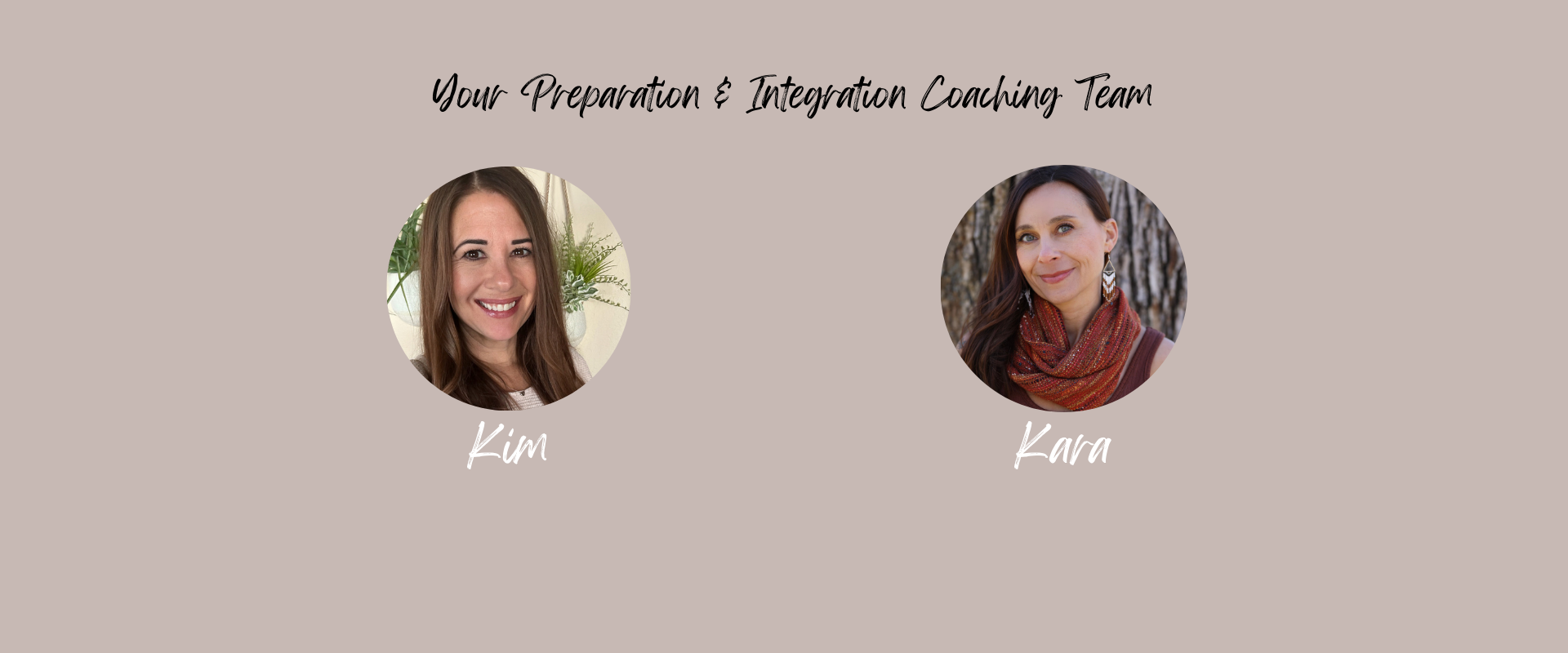
We are trained and certified preparation and integration coaches with several years of experience supporting clients navigating ketamine-assisted treatment. Our work is informed by both professional training and personal familiarity with deep inner work, giving us a grounded understanding of the kinds of experiences patients may encounter during treatment.
Many patients report shifts in perception, emotional material surfacing, or new insights emerging during ketamine sessions. Our role is to help clients approach these experiences with curiosity and perspective while maintaining emotional stability and orientation throughout the treatment process.
Our coaching approach is reflective, grounded, and trauma-informed. We focus on helping clients slow down, observe what is unfolding internally, and relate to their experiences with awareness rather than pressure to interpret or force meaning too quickly.
Because we work alongside clinical providers, we maintain clear professional boundaries and remain attentive to when additional therapeutic or medical support may be appropriate.

If you’re interested in exploring how preparation and integration support could complement your clinic’s work, we would welcome a brief conversation to learn more about your program and answer any questions.
Conversations are informational and designed to explore whether preparation and integration support would be helpful for your clinic and patients.